
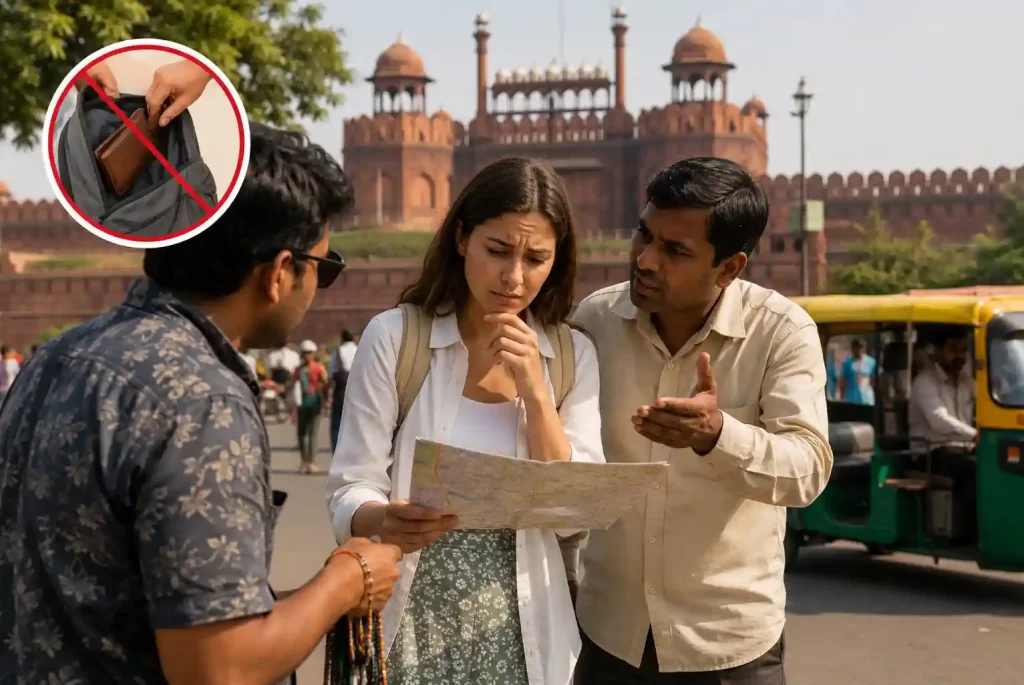
Delhi is one of India’s most visited cities, drawing millions of domestic and international travellers every year. But alongside its incredible monuments, food, and culture, the city also has a well-documented problem: tourist scams in Delhi that target first-time visitors and even seasoned travellers. From fake taxi drivers to overpriced tour packages and misleading government office scams, the traps are varied and often hard to spot in the moment. This guide gives you practical, ground-level knowledge to navigate Delhi safely in 2026, so you spend your trip enjoying the city, not recovering from a bad experience.
Why Delhi Scams Are Still a Problem in 2026
Despite increased policing and digital awareness, tourist fraud in Delhi remains common, especially around major attractions like Connaught Place, India Gate, Chandni Chowk, and New Delhi Railway Station. Scammers have evolved too. They now use smartphones, fake QR codes, and even well-rehearsed “friendly stranger” approaches to build trust before targeting you.
The core reasons why scams persist:
- High footfall of confused or first-time visitors unfamiliar with local prices
- Language barriers that make it easier to mislead foreign tourists
- Overcrowded transport hubs where attention is divided
- Limited awareness of official government tourism resources
The Most Common Tourist Scams in Delhi and How They Work
1. The Fake Tourism Office Scam
This is one of the most reported Delhi scams for tourists. Someone approaches you near a tourist area claiming your hotel is closed, your tour booking is invalid, or that you need to “reconfirm” at a government office. They take you to a travel agency disguised as an official government bureau. Once inside, you face pressure to buy overpriced packages.
How to avoid it: Only trust the official India Tourism office at 88, Janpath, New Delhi. Never follow strangers who volunteer unsolicited help about your bookings.
2. Overcharging by Auto-Rickshaws and Taxis
Unlicensed drivers and even some licensed ones routinely overcharge tourists at Delhi airport scams zones, railway stations, and busy markets. The meter is either broken, tampered, or simply ignored.
How to avoid it:
- Always use prepaid taxi counters at IGI Airport or railway stations
- Book cabs through Ola or Uber for transparent pricing
- For autos, ask for the meter and confirm the minimum fare upfront
- The Delhi Metro is the safest and most affordable way to travel across the city
3. The Gem and Jewellery Export Scam
A well-dressed stranger engages you in conversation and eventually asks if you can carry gems or jewellery to their “relative” abroad. They claim customs restrictions prevent them from doing so. You end up either carrying contraband unknowingly or paying for worthless stones.
How to avoid it: Never agree to carry goods for strangers. This is not just a scam, it is potentially a criminal offence under Indian customs law.
4. Fake Monks and Charity Collectors
Individuals dressed as monks or charity workers distribute bracelets, books, or flowers and then aggressively demand payment. Some claim the money goes to orphanages or temples. These operations are organized scams, not genuine fundraising.
How to avoid it: Politely decline and keep walking. Legitimate charities in India are registered under the FCRA (Foreign Contribution Regulation Act) and do not solicit on the street.
5. ATM and Card Skimming Scams
Standalone ATMs, especially in busy tourist areas, are sometimes fitted with card skimming devices. A “helpful” person nearby may distract you or pretend to assist.
How to avoid it:
- Use ATMs attached to bank branches, not standalone kiosks
- Cover the keypad when entering your PIN
- Avoid letting anyone stand close to you at an ATM
- Use UPI apps like Google Pay or PhonePe for daily transactions
6. Restaurant and Street Food Price Manipulation
Some restaurants near tourist spots show one menu outside and a different, higher-priced menu at the table. Street vendors also quote inflated prices for foreigners.
How to avoid it: Always ask for the menu with prices before ordering. Check if the restaurant has a GST registration number displayed, which is mandatory for businesses with turnover above Rs 20 lakh. Use Zomato or Google Reviews to check pricing before entering.
7. Fake Police Officers
Someone approaches you in plain clothes claiming to be a plainclothes officer, asks to check your currency for being “counterfeit”, and either steals cash or extorts a bribe.
How to avoid it: Real police officers carry an official ID and badge. Ask to see credentials. You can also call Delhi Police helpline 100 to verify if there is a genuine operation in the area.
Step-by-Step Safety Checklist Before You Arrive in Delhi
- Research official transport options from the airport before landing (Delhi Airport Metro Express, prepaid taxi counters)
- Save India Tourism helpline: 1800-11-1363 on your phone
- Download Ola, Uber, and Delhi Metro apps before arriving
- Book your hotel directly from verified platforms like MakeMyTrip, Booking.com, or the hotel’s official website
- Carry only limited cash and use UPI or cards for most payments
- Note down your hotel address in Hindi phonetics in case you need to show it to a driver
- Register with your country’s embassy or consulate if traveling internationally
High-Risk Areas and When to Be Extra Careful
Certain locations in Delhi have a higher concentration of scam activity. Being aware of these puts you ahead:
- New Delhi Railway Station (Paharganj side): Touts, fake booking agents, and overpriced accommodation pushers
- Connaught Place: Fake shoe-shiners, charity scammers, and overpriced shops
- Chandni Chowk: Price inflation, fake guides, and crowded pickpocket zones
- Qutub Minar and Red Fort surroundings: Unofficial tour guides and entry ticket scammers
- IGI Airport arrival area: Unofficial taxi drivers and hotel touts
The key rule: the more you look lost or uncertain, the more you become a target. Walk with purpose, use maps on your phone, and avoid extended conversations with strangers who approach you first.
Why Professional Relocation Services Can Help
If you are moving to Delhi permanently or on a long-term assignment rather than just visiting, working with a professional relocation company in Delhi dramatically reduces the risk of being misled by local agents, brokers, or transport providers.
Established relocation firms offer:
- Vetted local vendor networks, so you do not rely on unknown auto drivers or informal movers
- Transparent pricing with written contracts, eliminating hidden charges that commonly target newcomers
- Area orientation services that explain how local transport, markets, and services work
- Temporary accommodation assistance through verified hotel and housing partnerships
- Document and customs handling for international arrivals, eliminating exposure to fake customs agents
Companies like PM Relocations, with over three decades of experience handling domestic and international moves across India, provide end-to-end support that goes well beyond just transporting boxes. Their familiarity with Delhi’s neighborhoods, local transport systems, and service providers means you are not navigating an unfamiliar city alone. This level of support is especially valuable for expat relocations to Delhi, corporate transfers, and families moving from other cities who want a smooth, scam-free settlement experience.
What to Do If You Have Already Been Scammed
- Stay calm and move to a safe, public location
- Report to Delhi Police at 100 or visit the nearest police station
- Contact the India Tourism office (1800-11-1363) for tourist assistance
- If your card or cash was taken, call your bank immediately to block cards and initiate a fraud claim
- File an FIR (First Information Report) if you suffered financial loss, even if you are leaving Delhi soon. You can file an e-FIR on the Delhi Police website remotely
- Inform your country’s embassy if you are a foreign national and need consular assistance
Conclusion
Delhi is a genuinely rewarding city to visit, but a little preparation goes a long way. The key to avoiding tourist scams in Delhi in 2026 is simple: use official and app-based transport, verify everything independently, avoid unsolicited help from strangers, and trust your gut when something feels off. The scams described in this guide are not inevitable parts of a Delhi trip. Millions of travelers visit the city without any trouble because they know what to watch for.
If you are relocating to Delhi rather than just visiting, partnering with a professional relocation service removes most of the friction and risk from your move. The city rewards the prepared traveler and the informed new resident alike.
Frequently Asked Questions (FAQs)
Q1. What is the most common scam targeting tourists in Delhi?
The fake government tourism office scam is among the most reported. Strangers redirect tourists to private travel agencies posing as official government offices and pressure them into buying overpriced tour packages.
Q2. Is Delhi safe for solo female travelers in 2026?
Delhi is manageable for solo female travelers with the right precautions. Stick to the Delhi Metro for commuting, avoid walking alone after dark in unfamiliar areas, use app-based cabs rather than autos, and stay in well-reviewed accommodations. Delhi Police also operates a dedicated women’s helpline at 1091.
Q3. Are Ola and Uber safe to use in Delhi?
Yes. Ola and Uber are generally safe and reliable in Delhi. They offer transparent fare estimates, tracked rides, and emergency features within the app. Always verify the driver’s name, vehicle number, and photo before getting in.
Q4. Can I trust street food vendors in Delhi?
Many street food vendors are legitimate and serve excellent food. The risk is mainly around pricing transparency. Always confirm the price before ordering and avoid vendors who quote prices only after you have received the food.
Q5. What should I do if a police officer demands money?
Ask to see official credentials and note the officer’s name and badge number. You can report police misconduct to Delhi’s Anti-Corruption Branch or call the Delhi Police Commissioner’s office. Do not pay any unofficial “fine” on the spot.
Q6. Is the Delhi Metro safe and reliable?
The Delhi Metro Rail Corporation (DMRC) network is one of the most extensive urban rail systems in Asia, covering over 390 km across the city. It is generally safe, air-conditioned, and a reliable way to reach most tourist attractions. Dedicated women-only coaches are available on all lines.
Q7. Are there any apps that help tourists stay safe in Delhi?
Yes. These apps are genuinely useful:
- Delhi Metro app for route planning and fare calculation
- Ola and Uber for safe cab bookings
- Google Maps for navigation and business verification
- Zomato for restaurant price checks and reviews
- BHIM or Google Pay for cashless UPI transactions that avoid carrying large amounts of cash
Q8. What is the official India Tourism helpline number?
The India Tourism 24-hour helpline number is 1800-11-1363. It is toll-free and accessible from anywhere in India. The Ministry of Tourism also has a dedicated tourist grievance portal at incredibleindia.org.