
Introduction
If you are relocating to Delhi, one thing most people underestimate is the winter. Between November and February, the capital transforms into a city that tests even long-time residents. Temperatures drop to single digits, fog blankets the roads for hours every morning, and air quality index (AQI) levels regularly hit the “severe” or “hazardous” range. For a new resident, this combination can feel overwhelming and even dangerous if you are not prepared.
This Delhi winter survival guide is built specifically for newcomers: working professionals, students, families, expats, and senior citizens who need clear, practical guidance on navigating the city’s harshest season.
What Delhi Winters Are Really Like for New Residents
Delhi does not have a gentle transition into winter. By mid-November, temperatures begin falling sharply. January is the coldest month, with night temperatures averaging between 3 and 8 degrees Celsius and occasional cold waves pushing them even lower.
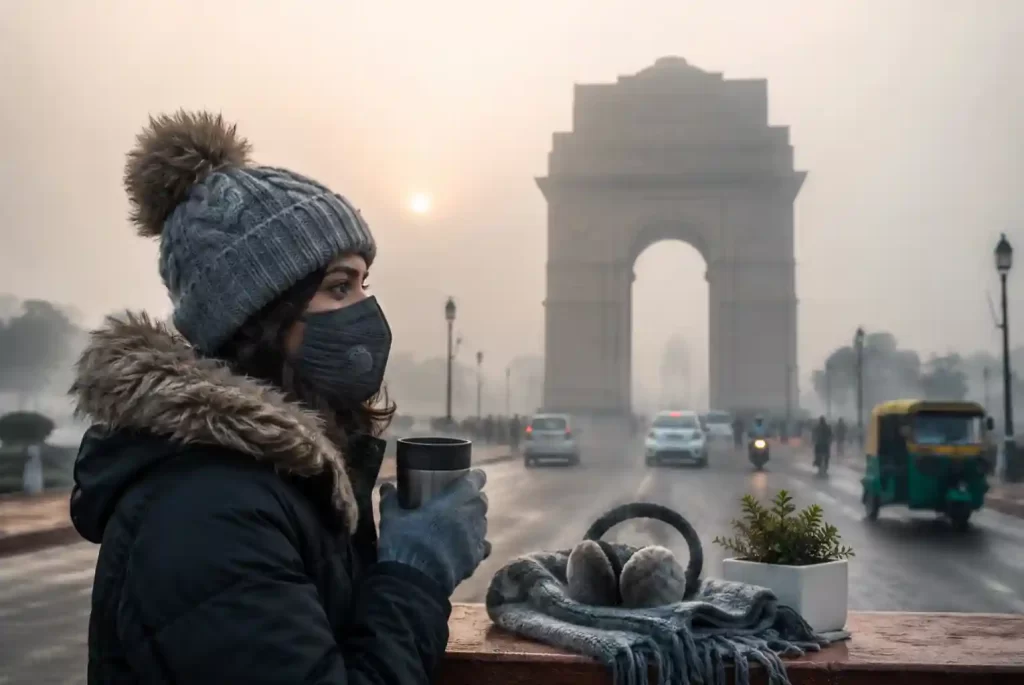
What makes Delhi different from other cold cities is the combination of factors hitting simultaneously. The dense winter fog can reduce road visibility to near zero before 9 AM. At the same time, stubble burning in neighbouring states, vehicle emissions, and construction dust cause AQI levels to spike above 400, which is classified as hazardous. New residents who arrive expecting a manageable chill are often caught off guard by how these three elements, cold, fog, and pollution, compound each other.
Why Fog and Pollution Become Severe in Winter
Cold air traps pollutants close to the ground. This meteorological phenomenon, called temperature inversion, is the main reason Delhi’s PM2.5 pollution levels skyrocket in winter. The cooler, heavier air sits near the surface and prevents pollutants from dispersing upward.
Fog forms under the same cold, still conditions and mixes with these trapped pollutants to create smog. This is not ordinary fog. It carries fine particulate matter that enters your lungs when you breathe unprotected. For anyone with asthma, chronic bronchitis, or even mild allergies, Delhi winters can trigger serious health episodes within days of arrival.
Essential Winter Preparations Before Relocating
The smartest move is to prepare before you land. Here is what to sort in advance:
Research your housing carefully. Choose a flat or apartment with sealed windows, proper insulation, and ideally a room where you can run an air purifier continuously. Older construction in areas like Lajpat Nagar or Karol Bagh tends to have poor insulation, while newer developments in Gurugram or Noida fringe areas are better sealed.
Carry or order your N95 masks before arriving. Generic surgical masks offer almost no protection against PM2.5. Stock at least 15 to 20 N95 masks for your first month.
Check whether your accommodation allows for room heaters. Many landlords have restrictions. If allowed, plan for the electricity bill. Room heaters in Delhi can add Rs 2,000 to 4,000 to your monthly expenses.
Best Clothing and Home Essentials for Delhi Winters
Delhi winter essentials are different from what you would need in hill stations. The cold here is damp and foggy, not dry like mountain cold. Layering is the correct strategy.
For outdoor use, invest in a windproof outer jacket, thermal inner wear, woollen mid-layers, gloves, a wool cap covering your ears, and a good neck gaiter. Do not rely on a single heavy coat as your only protection.
For home, buy thick curtains to block cold drafts from windows. Use door-bottom draft stoppers to reduce heat loss. A good-quality electric blanket or a thick razai (quilt) filled with pure cotton or down is essential for nights. A room heater or oil-filled radiator works better than a blower heater for overnight use because it heats without drying the air excessively.
Budget-conscious renters should note that second-hand winter essentials are widely available in markets like Sarojini Nagar and Lajpat Nagar at a fraction of retail prices.
How to Deal With Fog While Commuting
Delhi fog safety during the morning commute is one of the most underestimated risks. Dense fog between 6 AM and 10 AM can reduce visibility to under 50 metres on major roads.
If you drive, use low-beam headlights, not high beams, as they reflect off fog and reduce visibility further. Keep your speed significantly below the limit, maintain a larger-than-usual gap from the vehicle ahead, and avoid overtaking. Do not rely purely on GPS; fog can cause you to miss physical road markers.
If you use the Delhi Metro, it remains largely unaffected by fog and is the single most reliable commuting option during severe fog days. Plan your schedule around metro routes whenever possible.
Avoid driving on the expressways, including the Delhi-Meerut and Delhi-Gurugram expressways, during heavy fog mornings. These stretches see multi-vehicle pile-ups every winter due to poor visibility.
Managing Pollution and Maintaining Indoor Air Quality
This is where most new residents make costly mistakes. They buy a cheap air purifier with a basic HEPA filter and assume they are protected. They are not.
For effective protection against Delhi’s PM2.5 and PM10 levels, you need an air purifier with a HEPA H13 or H14 filter combined with an activated carbon layer to tackle gaseous pollutants. Brands like Dyson, Blueair, Xiaomi, and Philips have reliable models at different price points.
Run the purifier in your bedroom continuously when AQI exceeds 200. Keep windows shut on high-pollution days. Use exhaust fans in the kitchen to remove cooking smoke, which adds to indoor pollution significantly.
Outdoors, wear N95 or KN95 masks on all days when AQI exceeds 150. On AQI days above 300, limit outdoor activity entirely if possible.
Health and Wellness Tips During Winter Months
Delhi winter health precautions begin with understanding what you are up against. Respiratory infections, sinusitis, eye irritation, dry skin, and viral fever are the most common winter ailments affecting new residents.
Drink at least 2.5 to 3 litres of water daily. Cold weather suppresses the sensation of thirst but your body still loses moisture through breathing and skin. Dehydration worsens respiratory issues.
Eat warm, immunity-supporting foods: turmeric milk, ginger tea, soups, and seasonal vegetables like sarson (mustard greens) and methi (fenugreek). Vitamin C-rich foods like amla and citrus fruits help maintain immunity.
Apply a thick moisturiser immediately after every bath to prevent skin from cracking due to cold and low humidity. Use a nasal saline spray if you experience dryness or irritation in your nasal passage after outdoor exposure.
Winter Safety Tips for Children, Elderly People, and Pets
Children are far more vulnerable to cold and pollution exposure than adults. Keep children indoors on AQI-severe days. Ensure their school bags carry N95 masks and that they use them consistently on the commute.
Elderly residents face the highest risk from cold waves and respiratory distress. Ensure they have easy access to their medication, a warm sleeping environment, and limited exposure to outdoor cold in early mornings or late evenings.
For pets, especially dogs, shorten morning walks on extremely cold or high-pollution days. Use pet-safe paw balm to prevent cracking from the cold ground. Smaller or short-haired breeds may need a dog coat for outdoor time.
Common Mistakes Newcomers Should Avoid
Underestimating how quickly conditions worsen is the most common error. A clear afternoon can turn into dense fog before your 8 AM commute the next day.
Relying on cloth or surgical masks is another widespread mistake. Only N95 masks provide meaningful protection against Delhi’s winter particulate pollution.
Leaving windows open for ventilation on high-AQI days backfills your home with polluted air. On days when AQI exceeds 200, ventilation should be managed through your purifier, not open windows.
Skipping warm clothing for short outdoor trips is also a risk. Even 20 minutes in cold, damp, polluted air without protection increases exposure significantly.
Delhi Winter Survival Checklist
- N95 masks (minimum 20 units to start)
- HEPA H13 air purifier for bedroom and living area
- Thermal inner wear, woollen layers, and windproof jacket
- Thick curtains and door draft stoppers
- Room heater or oil-filled radiator
- Vitamin C supplements and immunity-supporting food staples
- Moisturiser, saline nasal spray, and eye drops
- Metro route plan as a backup commute option
- AQI monitoring app (SAFAR or IQAir are reliable)
- Emergency medicines for respiratory symptoms
Final Tips for Adjusting Comfortably to Delhi’s Winter Season
The residents who adapt fastest to Delhi winters are those who accept the season’s demands rather than fighting them. Build your daily routine around the fog and pollution timetable. Schedule outdoor activities between 11 AM and 3 PM when fog has cleared and pollution levels are comparatively lower.
Stay updated on AQI forecasts through the SAFAR India app, published daily by the Ministry of Earth Sciences. On days with AQI above 400, treat it as seriously as you would a storm warning.
This Delhi winter survival guide gives you the foundation to protect your health, manage your commute, and live comfortably through one of India’s most demanding urban winters. The city rewards those who prepare. Start before the cold arrives, not after.