
Introduction
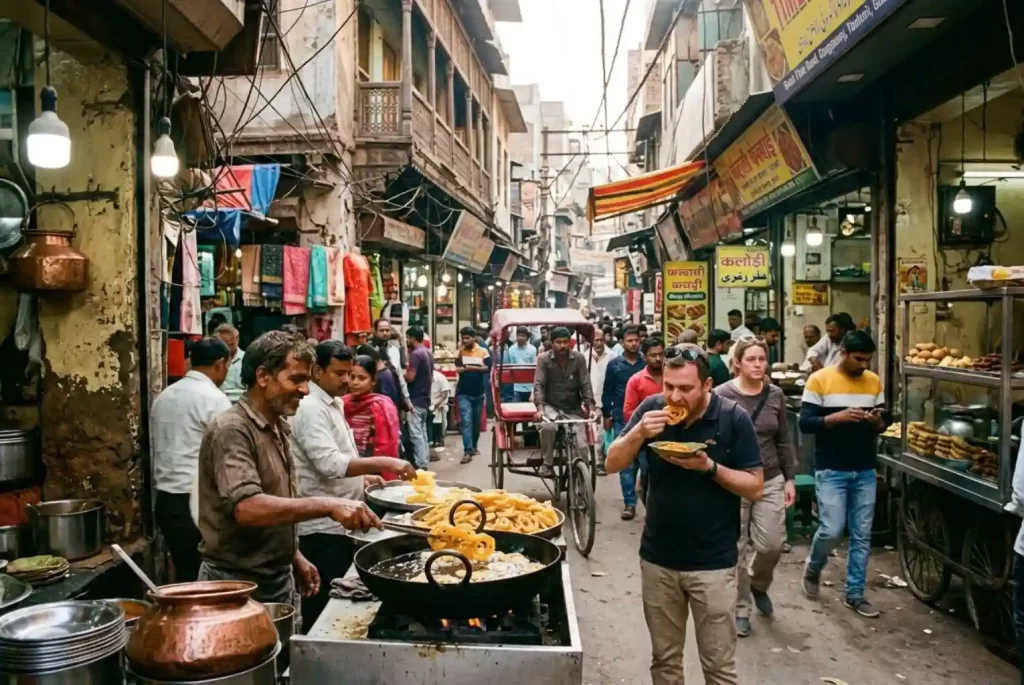
There is a particular kind of magic that lives in the narrow lanes of Old Delhi — especially when it comes to old Delhi food. It hits you before you even take a single bite. The smell of ghee-soaked bread on a hot griddle, the sizzle of kebabs over open flame, the sharp sweetness of freshly fried jalebis dipped in sugar syrup — it all wraps around you like a warm, familiar embrace. This is not just a place. It is a feeling. And at the heart of that feeling is old Delhi food.
Old Delhi Street food is not a trend. It is a centuries-old tradition that has survived empires, partition, and time itself. Every vendor, every tiny shop, and every age-worn recipe tells a story that goes far deeper than the plate in front of you.
The Soul of Old Delhi — Where Every Lane Tells a Story
A City Within a City
Purani Dilli, as locals call it, operates on its own rhythm. The bylanes of Chandni Chowk do not follow logic — they follow life. Cycle rickshaws weave past handcart vendors. Wholesale spice shops sit beside hundred-year-old sweet stalls. The noise is constant, the energy relentless. And yet, the moment you slow down and pay attention, everything starts to make perfect sense.
This is a city within a city, shaped by centuries of trade, migration, and royal influence. The Mughal food Delhi connection runs deep here. When the Mughal emperors made this city their home, they brought with them a culinary culture that prized slow cooking, layered spices, and generous portions. That legacy survives in every bite of seekh kebab and every bowl of nihari you eat here today.
Why Old Delhi’s Food Culture is Unlike Anywhere Else
Most food cultures evolve and adapt with time. Old Delhi cuisine does too — but it also holds firm to its roots in a way that is rare and remarkable. Families here have been running the same food stalls for four, five, even six generations. Recipes are passed down like heirlooms. A paratha recipe from 1875 is still being made the same way in 2025.
This devotion to tradition is what makes the best food in Old Delhi feel so different from anything you will find in a modern restaurant. There are no gimmicks, no fusion experiments. Just honest, deeply flavoured food made with skill and pride.
Navigating the Delicious Chaos — How to Explore Old Delhi’s Food Lanes
The Best Time to Visit
If you want to experience Old Delhi food at its most alive, visit on a weekday morning between 8 AM and 11 AM. The breakfast rush is unlike anything you have seen. Stalls that have been running since before dawn start filling up fast. By mid-morning, the iconic spots are packed with locals who know exactly what they want.
Evenings are equally vibrant, especially around the kebab lanes near Jama Masjid, where the smell of coal-grilled meat drifts through the air well past midnight.
Where to Start Your Food Walk
An Old Delhi food walk is best started at Chandni Chowk metro station. Step out, take a breath, and resist the urge to rush. The best experiences here come to those who wander. Turn into Paranthe Wali Gali for breakfast. Wind your way toward Dariba Kalan. Follow your nose.
Getting Around the Narrow Bylanes
Skip the cab. The lanes of Purani Dilli are too narrow for anything beyond a cycle rickshaw or your own two feet. Wear comfortable shoes, carry cash in small denominations, and do not be shy about pointing at what the person next to you is eating. Half the fun is discovering something you did not plan to try.
Breakfast Like a Local — Morning Bites You Can’t Miss
Paranthe Wali Gali — Crispy, Stuffed, and Legendary
No Old Delhi food guide for tourists is complete without a mention of Paranthe Wali Gali. This lane, which translates literally to “the alley of parathas,” has been serving stuffed flatbreads since the 1870s. The parathas here are fried on iron griddles with generous amounts of desi ghee and filled with everything from spiced potato to dried fruits and even rabri.
The experience is simple and deeply satisfying. You sit on a wooden bench, a plate arrives, and for a few minutes, nothing else matters.
Jalebi and Rabri at the Crack of Dawn
The jalebis at Old Famous Jalebi Wala in Chandni Chowk are a Delhi institution. Made fresh every morning, these spiralled sweets are crispy on the outside and drenched in warm sugar syrup on the inside. Pair them with thick, cold rabri and you have one of the finest breakfast combinations that Old Delhi cuisine has to offer.
Nihari and Kulcha — The Mughal Morning Ritual
Nihari is one of the oldest dishes in Delhi’s culinary history. Originally a royal breakfast prepared overnight and served at dawn, this slow-cooked meat stew is flavoured with a complex blend of spices and finished with ginger, lime, and fresh coriander. Paired with soft, pillowy kulcha, it is deeply comforting and entirely unforgettable — a dish that carries the full weight of Mughal food Delhi history in every spoonful.
The Iconic Street Foods of Old Delhi
Chole Bhature — The Quintessential Delhi Experience
If there is one dish that defines Delhi food history, it might just be chole bhature. Spiced chickpeas served with large, puffed fried bread — it is bold, filling, and delicious. Every stall has its own version, its own spice blend, its own loyal following. Try it early before the oil gets heavy.
Dahi Bhalle and Aloo Tikki — The Chaat Universe
Old Delhi street food is also chaat country. Soft lentil dumplings soaked in yoghurt and topped with tamarind chutney and spiced water — dahi bhalle is cooling, tangy, and deeply satisfying. Aloo tikki, the humble fried potato patty, is another staple that somehow manages to be greater than the sum of its parts.
Kebabs from the Lanes of Matia Mahal
The lanes near Jama Masjid, particularly Matia Mahal, are home to some of the best street food in Old Delhi when it comes to meat. Seekh kebabs, galouti kebabs, and shami kebabs are all available here, grilled fresh and served with thin roomali roti and mint chutney. These are not fast-food kebabs. They are made with care, cooked slowly, and eaten best while standing on the pavement.
Karim’s — Where Mughal Recipes Live On
No visit to the Chandni Chowk food tour circuit is complete without a meal at Karim’s. Established in 1913 by the descendants of royal Mughal chefs, Karim’s has been serving the same recipes for over a century. The mutton korma, the seekh kebab, the dal — all are made with a quiet confidence that only comes from generations of mastery.
Hidden Gems Most Tourists Never Find
Old Shops with Century-Old Recipes
Beyond the famous names lie dozens of tiny, unmarked shops that have been operating for generations without ever seeking attention. A small halwa shop that opens only in winter. A chai stall that has served the same cup since before independence. These places are hidden food gems of Chandni Chowk in the truest sense — discovered only by those willing to slow down and look.
The Tiny Sweet Shops Worth Hunting Down
Ask a local where to find the best sohan halwa or the finest til ki gajak and they will point you down a lane you would never have entered on your own. These shops do not advertise. They do not need to.
Lassi, Sherbet, and Drinks to Beat the Heat
Old Delhi summers are punishing. The food stalls know this. Thick, creamy lassi served in clay cups, chilled rooh afza sherbets, and cold thandai are all available throughout the lanes and provide the perfect respite between bites.
The Sweets of Old Delhi — A World of Their Own
Daulat ki Chaat — The Cloud Dessert of Delhi
Perhaps the most unusual, sweet in all Old Delhi food is daulat ki chaat. Made by whipping milk froth overnight in the winter cold, this airy, cloud-like dessert is topped with saffron, powdered sugar, and khoya. It is available only in winter, only in the morning, and only here. Its delicacy and impermanence make it all the more special.
Sohan Halwa, Gajak, and Seasonal Treats
Old Delhi’s sweet shops shift with the seasons. Winter brings gajak sesame and jaggery brittle, and rich sohan halwa. Summer offers cooling kulfi and fruity sherbets. Every season has its own chapter in the Old Delhi food guide for tourists worth exploring.
The History on Your Plate
The food of Purani Dilli did not emerge from a vacuum. It was shaped by centuries of Mughal rule, by the spice traders of Khari Baoli, by the waves of migration that brought new communities and new flavours into the city’s fold. Each dish carries within it the memory of the hands that first made it, and the stories of the city that shaped them.
To eat in Old Delhi is not just to eat. It is to participate in something much larger — a living, breathing food heritage that has nourished this city for hundreds of years.
Tips for First-Time Food Explorers in Old Delhi
Start your Old Delhi food walk with a light stomach and an open mind. Eat small portions at multiple stops rather than filling up at one place. Always carry water. Stick to stalls with high turnover — fresh food and a crowd are both good signs. Budget anywhere between ₹300 and ₹700 for a satisfying half-day food walk, depending on how adventurous your appetite gets.
Final Thoughts
The chaos of Old Delhi is real. The noise, the crowds, the relentless motion — none of it is exaggerated. But neither is the magic. Beneath all of it lies a timeless food paradise that has been feeding Delhi’s soul for centuries. You just have to be willing to step in, slow down, and let the food find you.
It always does.