
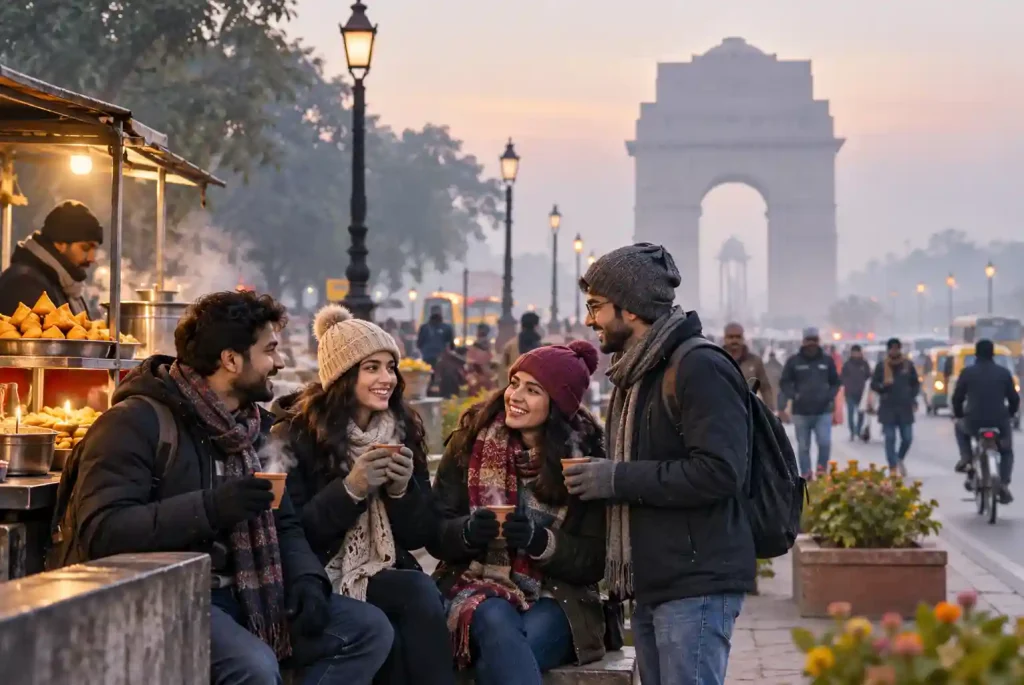
Moving to Delhi for the first time? Winter here can catch newcomers off guard. The city swings from warm October afternoons to sharp, foggy cold within just a few weeks. Many people underestimate how cold Delhi nights get, or how badly the air quality drops once winter sets in. This Delhi winter survival guide covers everything a newcomer needs: what temperatures to expect, how to handle the pollution, what clothes to buy, and how to keep a home warm and comfortable. Whether you are relocating to Delhi for work, family, or a fresh start, this guide will help you settle into your first Delhi winter without any nasty surprises.
When Does Winter Actually Start in Delhi?
Delhi’s winter usually runs from late November to February, with December and January being the coldest months. Daytime highs during this period stay around 18 to 22 degrees Celsius, while night temperatures often fall to 4 to 8 degrees. During a cold wave, night temperatures can drop close to freezing, especially in open areas on the city’s outskirts.
Dense fog is common in December and January, mostly in the early mornings. It reduces visibility on roads and often delays flights and trains. Winter usually starts easing by the first week of March, so newcomers should plan for at least three to four months of cold, dry weather.
Understanding Delhi’s Winter Air Pollution
Winter is also when Delhi air pollution is at its worst. Cold air traps smoke and dust closer to the ground, and stubble burning in nearby states adds to the problem. The Air Quality Index (AQI) often crosses the “poor” or “very poor” mark between October and January, and newcomers should take this seriously from day one.
What Is GRAP and Why It Matters
The Graded Response Action Plan (GRAP) is the government’s system for controlling pollution as it gets worse. It has four stages, and each stage adds stricter rules:
- Stage 1 (AQI 201 to 300, “poor”): dust control at construction sites, stricter checks on polluting vehicles, and a ban on open burning of waste.
- Stage 2 (AQI 301 to 400, “very poor”): a ban on coal and firewood use, including tandoors in restaurants, and restrictions on diesel generators.
- Stage 3 (AQI 401 to 450, “severe”): a ban on non-essential construction and demolition work, and restrictions on older BS-III petrol and BS-IV diesel vehicles.
- Stage 4 (AQI above 450, “severe plus”): entry bans on trucks, further vehicle restrictions, and a shift to hybrid or online classes in schools.
These stages are decided by the Commission for Air Quality Management (CAQM) and can change quickly depending on weather and wind patterns, so it helps to check a live AQI app before heading out on a bad-air day.
How Newcomers Can Protect Themselves
- Check the daily AQI using a reliable app before planning outdoor activities.
- Wear an N95 or N99 mask outdoors when AQI is above 200.
- Use an air purifier indoors, especially in the bedroom, and keep windows closed on “very poor” or “severe” AQI days.
- Avoid morning walks or outdoor exercise when pollution usually peaks, in the early morning and late evening.
What to Wear During a Delhi Winter
Delhi winter clothing works best in layers, because the temperature swings a lot between morning, afternoon, and night. A typical layering plan looks like this:
- A thermal base layer for the coldest days, especially in January.
- A sweater or fleece as a middle layer.
- A warm jacket or woolen coat for mornings, evenings, and outdoor travel.
- A scarf, gloves, and a cap for early morning fog and cold waves.
Avoid packing only one very heavy coat. Afternoons can still feel mild, so lighter layers that you can add or remove are more practical than a single bulky jacket.
Preparing Your Home for Delhi Winter
Most homes in Delhi do not have central heating, so newcomers need to plan for warmth room by room.
- Install a geyser (water heater) if one is not already fitted, since tap water gets very cold from December onward.
- Use an oil-filled radiator or convection heater for bedrooms and living rooms, and always keep a window slightly open for ventilation when using a gas or coal-based heater.
- Seal gaps around windows and doors with weather strips to block cold drafts.
- Use heavy curtains and a humidifier if the air inside feels too dry, since heaters can dry out the air quickly.
Health Tips for a Delhi Winter
Cold, dry air combined with pollution can affect health, especially for people who are new to the city’s climate.
- Moisturize skin and lips daily, and stay hydrated, since people often drink less water in winter without realizing it.
- Watch for symptoms like persistent cough, throat irritation, or breathlessness, and consult a doctor if they continue.
- Children, elderly family members, and anyone with asthma or a heart condition should take extra precaution on high-AQI days.
Getting Around Delhi During Foggy Mornings
Dense fog between December and January is one of the biggest daily disruptions for newcomers. It can delay or reroute flights, slow down trains, and make road travel risky due to poor visibility.
- Check your flight or train status online before leaving for the airport or station on foggy mornings.
- Add extra travel time for any early morning commute in December and January, and drive slowly with fog lights on.
- Where possible, shift important meetings or travel to slightly later in the morning once the fog clears.
Common Mistakes Newcomers Make
- Ignoring the AQI and going outdoors without a mask on severe pollution days.
- Packing only heavy woolens and forgetting light layers for milder afternoons.
- Not checking if the new home has a working geyser and heater before moving in.
- Booking early morning flights in December or January without a fog buffer.
- Skipping a home inspection for drafts, damp walls, or poor insulation before winter arrives.
Why Professional Relocation Services Can Help
Settling into a new city during winter adds extra pressure to an already stressful move. This is where professional relocation services can make a real difference. Experienced movers understand seasonal challenges like fog delays and cold-weather packing needs, and they plan transport schedules accordingly.
A good relocation company handles professional packing with weather-appropriate material, safe loading and unloading, and reliable transportation with tracking so you always know where your belongings are. Many also offer insurance assistance, help with documentation, and door-to-door service, which is especially useful for bulky or fragile items like furniture, electronics, and glassware. While movers cannot control the weather or the AQI, a team like PM Relocations can reduce the stress of moving during winter by handling the logistics so you can focus on settling in.
Frequently Asked Questions
What is the coldest month in Delhi?
January is usually the coldest month in Delhi, with night temperatures often between 4 and 8 degrees Celsius. December is a close second, especially during cold waves, when temperatures can drop even further for a few days at a stretch.
Is it safe to live in Delhi during the winter pollution season?
Yes, but newcomers should take basic precautions. Check the daily AQI, wear a mask outdoors on poor or very poor days, and use an air purifier indoors. Following this Delhi winter survival guide and staying alert to GRAP updates makes the season much easier to manage.
What should I pack for a Delhi winter?
Pack layers rather than one heavy coat: thermals, a sweater, a warm jacket, plus a scarf, gloves, and a cap for foggy mornings. Since afternoons can still be mild, layering gives you more flexibility than bulky winter wear.
What is GRAP and how does it affect newcomers?
GRAP, or the Graded Response Action Plan, is a four-stage system that adds pollution control rules as Delhi’s AQI worsens. It can affect vehicle use, construction work, and even school schedules, so it is worth checking which stage is active during high-pollution weeks.
Do I really need an air purifier in Delhi?
An air purifier is strongly recommended, especially for bedrooms, since outdoor AQI often reaches “very poor” or “severe” levels in winter. It is not legally required, but it noticeably improves indoor air quality during peak pollution weeks.
How cold does Delhi actually get at night?
Night temperatures typically fall between 4 and 8 degrees Celsius in December and January. During a cold wave, temperatures can drop close to freezing in open or less built-up areas, so warm bedding and a room heater are worth having ready.
When does Delhi’s winter end?
Winter generally eases by late February and ends by the first week of March, giving way to a short, pleasant spring before temperatures start climbing again in April.
Conclusion
Your first Delhi winter does not have to be stressful. Once you understand the temperature drop, the fog, and the pollution stages under GRAP, most of the season becomes predictable and manageable. Layer your clothing, prepare your home with a geyser and a heater, keep an eye on the daily AQI, and build in extra time for foggy mornings. Following this Delhi winter survival guide step by step will help you move through the cold months comfortably, whether this is your first winter in the city or you are simply switching homes within Delhi NCR.