
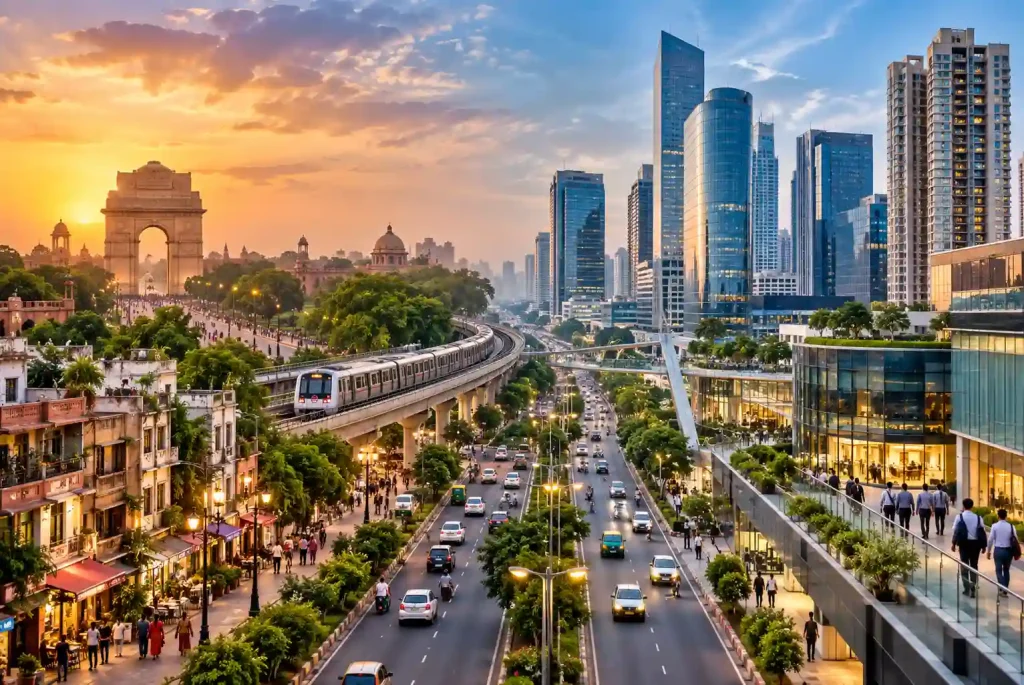
Moving to the National Capital Region and stuck choosing between two cities? You are not alone. Every year, thousands of professionals and families compare Delhi vs Gurgaon before they pick their new home. Both cities sit close together, but they feel very different once you actually live there.
This guide breaks down the real differences between Delhi and Gurgaon. You will learn how each city compares on jobs, cost of living, commute, safety, and daily lifestyle. By the end, you will know which city fits your needs better, whether you are relocating for work, family, or a fresh start.
Delhi vs Gurgaon: A Quick Overview
Delhi is India’s capital and one of the oldest cities in the country. It has a mix of old neighbourhoods, government offices, universities, and modern business districts. Gurgaon (officially called Gurugram) is a much newer city. It grew fast over the last 25 years into a major corporate hub with glass office towers, malls, and gated housing societies.
Here is the simple difference:
- Delhi offers history, government jobs, and lower housing costs in many areas.
- Gurgaon offers corporate jobs, modern infrastructure, and a more organised urban layout.
Neither city is universally “better.” The right choice depends on your job, budget, and lifestyle priorities.
Job Opportunities: Where Will You Work?
Gurgaon’s Corporate Advantage
Gurgaon is home to the Indian offices of many Fortune 500 companies, including firms in IT, finance, consulting, and FMCG. Cyber City, Udyog Vihar, and Golf Course Road are packed with corporate campuses. If you work in a multinational company, a tech firm, or a consulting role, chances are your office is in Gurgaon.
Delhi’s Government and Traditional Sectors
Delhi has strong opportunities in government services, media, education, healthcare, and trading businesses. Central government offices, PSUs, embassies, and many established Indian companies are based here. Delhi also has a larger informal and traditional business economy, especially in areas like Karol Bagh, Chandni Chowk, and Lajpat Nagar.
Practical tip: If your job or industry is corporate and MNC-driven, living near Gurgaon usually cuts your commute time. If you work in government, education, or a traditional trade, Delhi keeps you closer to work.
Cost of Living: Delhi vs Gurgaon
Cost of living is one of the biggest factors people weigh when comparing Delhi vs Gurgaon.
- Housing: Gurgaon’s prime sectors, especially near Golf Course Road and DLF colonies, are generally more expensive to rent or buy than most parts of Delhi. Delhi offers a wider spread of housing options, from affordable outer areas like Dwarka and Rohini to expensive South Delhi colonies.
- Daily expenses: Groceries, eating out, and everyday services tend to cost a bit more in Gurgaon’s upscale sectors compared to an average Delhi neighbourhood.
- Utilities and schooling: Private schools and childcare in Gurgaon’s sought-after sectors often carry a premium compared to similar options in Delhi.
Bottom line: If affordability is your top priority, Delhi generally gives you more budget-friendly choices. If you prefer newer housing and are willing to pay more for convenience, Gurgaon’s residential sectors are built for that lifestyle.
Commute and Connectivity
Both cities are connected by the Delhi Metro, which links major parts of Gurgaon (via the Yellow Line and Rapid Metro) to central Delhi. Here is what to expect:
- Metro connectivity: Good between central Gurgaon sectors and Delhi, but newer Gurgaon sectors along Dwarka Expressway and Sohna Road still depend heavily on private vehicles.
- Road traffic: NH-48 (the main Delhi-Gurgaon highway) sees heavy congestion during office hours. A trip that takes 30 minutes at night can take over an hour during peak traffic.
- Within-city travel: Delhi’s road network is older and more spread out, so travel time depends a lot on which part of the city you live and work in.
Practical tip: If you already work in Gurgaon, living in Gurgaon itself (rather than commuting from Delhi) saves significant daily travel time.
Infrastructure and Civic Amenities
Gurgaon was built around private developers and corporate parks, so many essential services like internal roads, water supply, and waste management inside private societies are handled by resident associations rather than the municipal body. This means service quality can vary a lot between one sector and another.
Delhi, being an older and larger city, has a more established (though sometimes strained) municipal infrastructure. Water supply, drainage, and public services are generally more uniform across most areas, though older colonies can face their own maintenance issues.
Air Quality and Environment
Both Delhi and Gurgaon are part of the Delhi NCR region, which faces serious air pollution during winter months, especially from October to January. Neither city has a clear advantage here. Air quality in both cities can fall into the “poor” or “severe” category during this period due to factors like vehicle emissions, construction dust, and stubble burning in nearby states.
If air quality is a major health concern for your family, this is a regional issue rather than a Delhi-versus-Gurgaon issue, and it is worth planning for regardless of which city you choose.
Lifestyle and Social Life
Delhi offers a rich mix of culture, history, and food. From Mughal-era monuments to modern art galleries, there is a lot to explore. It also has a wider variety of markets, from budget shopping to designer stores.
Gurgaon has a more modern, mall-and-cafe lifestyle. Cyber Hub, DLF malls, and rooftop restaurants cater to a younger, corporate crowd. If you enjoy a fast-paced, urban social scene close to your workplace, Gurgaon fits that lifestyle well.
Common Mistakes to Avoid When Choosing
- Choosing a city before checking your office location. A long commute can undo any benefit of a bigger house or lower rent.
- Ignoring the school admission process. Good schools in both cities have limited seats and specific admission windows, so plan early if you have children.
- Overlooking society maintenance charges in Gurgaon. These can add a noticeable amount to your monthly housing cost.
- Assuming pollution is worse in one city. Both cities are equally affected during winter.
Why Professional Relocation Services Can Help
Relocating between Delhi and Gurgaon, or moving into the NCR from another city, involves more than just booking a truck. Professional relocation services can make the process smoother and safer in several ways:
- Professional packing: Trained packers use proper materials to protect furniture, electronics, and fragile items during transit.
- Safe loading and unloading: Experienced teams know how to handle heavy or bulky items without damaging them or your property.
- Transportation: Reliable movers plan routes that account for city traffic patterns, including congested stretches like NH-48.
- Tracking: Many moving companies offer shipment tracking so you know where your belongings are at each stage.
- Insurance assistance: Reputable movers can guide you through transit insurance options in case of damage or loss.
- Documentation: For corporate relocations or moves involving vehicle transport, movers can help manage the required paperwork.
- Door-to-door service: This reduces the physical and mental load of coordinating multiple vendors yourself.
- Handling fragile and bulky items: Pianos, glass furniture, and large appliances need special handling that professional teams are trained for.
Hiring movers does not remove all effort from a relocation, but it does reduce the physical strain and the risk of damage or loss, especially for long-distance or corporate moves.
Frequently Asked Questions
1. Is Gurgaon more expensive than Delhi?
In general, yes. Gurgaon’s popular sectors tend to have higher rent and housing costs compared to most parts of Delhi, though Delhi’s prime South Delhi areas can be just as expensive or more.
2. Which city is better for IT and MNC jobs, Delhi or Gurgaon?
Gurgaon has a stronger concentration of multinational and IT companies, especially around Cyber City and Udyog Vihar. This makes it a common choice for corporate professionals.
3. Is the commute between Delhi and Gurgaon difficult?
Yes, especially during office hours. NH-48 sees heavy traffic, so many professionals prefer living closer to their workplace rather than commuting daily between the two cities.
4. Which city has better schools, Delhi or Gurgaon?
Both cities have well-regarded schools. Delhi has more long-established institutions, while Gurgaon has several newer schools built for its growing corporate population. Admission planning matters more than city choice here.
5. Is Gurgaon safer than Delhi, or vice versa?
Safety varies by specific neighbourhood in both cities rather than by city as a whole. It is worth researching the safety record of the exact sector or colony you are considering.
6. Does Delhi or Gurgaon have worse air pollution?
Both cities are part of the same NCR airshed and face similarly poor air quality during winter months. This is a regional issue, not one specific to either city.
7. Should I hire packers and movers for a Delhi-to-Gurgaon move?
For a short-distance move like this, hiring professional relocation services is still useful if you have fragile items, bulky furniture, or a tight moving schedule, since it reduces the physical effort and risk of damage.
Conclusion
There is no single winner in the Delhi vs Gurgaon debate. Gurgaon works better if your career is tied to corporate or MNC jobs and you want modern housing and infrastructure. Delhi works better if you want more affordable housing options, a wider spread of neighbourhoods, and closer access to government, education, or traditional business sectors.
Before you decide, check your workplace location, your budget, and your family’s specific needs like schooling. Whichever city you choose, planning your move with a reliable relocation partner will make the transition easier and less stressful.