
Introduction
Moving is stressful enough when you’re on your own, but coordinating a large family move multiplies that stress exponentially. Between packing up years of accumulated belongings, managing everyone’s emotions, and keeping track of multiple schedules, it’s easy to feel overwhelmed. The good news? With the right strategies and organization, you can achieve a stress-free moving experience that brings your family together rather than tears you apart.
Start Planning Earlier Than You Think
The biggest mistake families make is underestimating the amount of time they need. For a large household organization effort like moving, start planning at least two to three months. Create a family moving timeline that breaks down tasks week by week, so nothing gets left until the last minute.
Begin by holding a family meeting where everyone understands what’s happening and when. It isn’t just about logistics—it’s about getting buy-in from every family member. When kids feel involved in the process rather than victims of it, they’re more likely to cooperate. Use this time to address concerns, answer questions, and start building excitement about your new home.
Assign Age-Appropriate Responsibilities
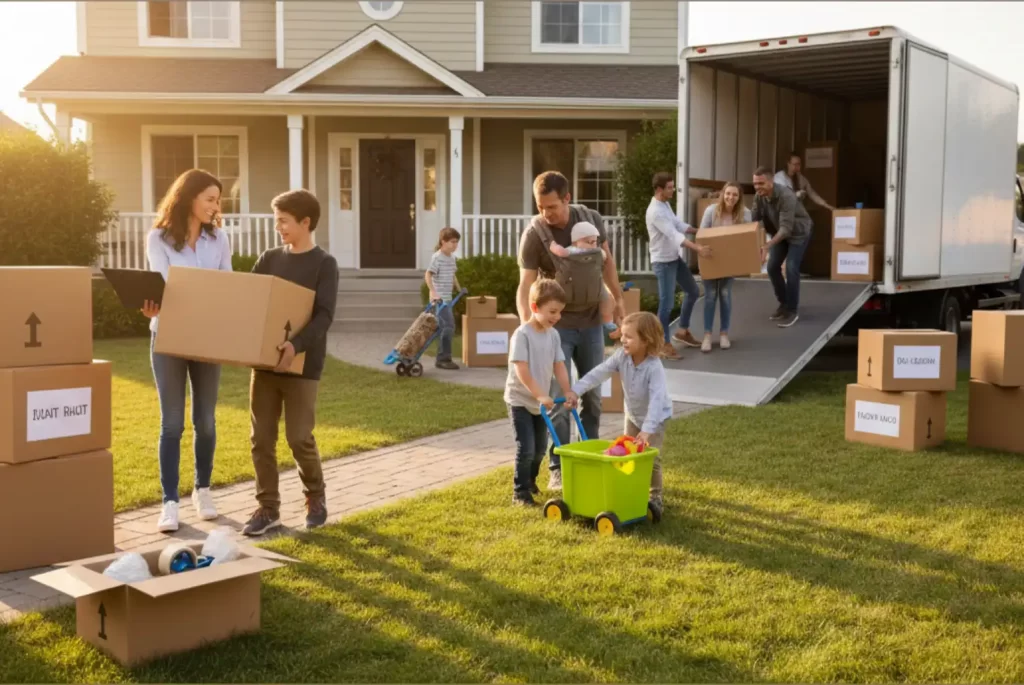
One of the most effective ways to manage moving with kids is to give everyone ownership of specific tasks. Teenagers can take charge of packing their own rooms, researching the new neighborhood, or even helping younger siblings prepare. They’re capable of handling significant responsibility and often appreciate being treated like adults during major family transitions.
Elementary-aged children can sort their toys, pack their books, and create drawings or labels for their boxes. Even toddlers can participate by choosing which stuffed animals to bring or placing small items in designated bins. The key is making it age-appropriate and, whenever possible, fun. Turn packing sessions into games with music, set timers for challenges, or offer small rewards for completed tasks.
Declutter Before You Pack
Before you start boxing up your entire life, take time for a thorough decluttering session. Moving with multiple children means you’ve likely accumulated toys, clothes, sports equipment, and school projects that nobody uses anymore. A family moving checklist should always include dedicated decluttering time.
Go room by room and be ruthless. Involve your children in deciding what stays and what goes—this teaches valuable lessons about letting go and reduces the volume of items you’ll need to transport. Consider hosting a garage sale where kids can sell their old toys and keep the proceeds, or make donation runs to local charities together. It transforms decluttering from a chore into a meaningful family activity.
Develop a Color-Coded System
Organization is critical when you’re moving large household amounts of household belongings. Implement a color-coded system where each family member gets assigned a specific color. Use colored tape, stickers, or markers to label every box belonging to that person. It makes unpacking infinitely easier because movers and family members can quickly identify where boxes should go.
Take it a step further by creating a master list that details what’s in each numbered box. While this takes extra time upfront, it saves hours of frustration when you’re searching for specific items in your new home. Clearly label boxes with both the color code and the destination room—”Blue – Sarah’s Bedroom” or “Green – Kids’ Bathroom.”
Pack Smart: Essential Boxes First
Not all boxes are created equal. Create “open first” boxes for each family member containing everything they’ll need for the first 24-48 hours: clothing, toiletries, medications, phone chargers, and comfort items. Pack a family essentials kit with paper plates, plastic utensils, snacks, basic cleaning supplies, toilet paper, and a first aid kit.
Keep important documents—birth certificates, medical records, school files, and financial papers—in a clearly labelled folder or box that travels with you rather than on the moving truck. The same goes for valuables, medications, and anything irreplaceable. It ensures that even if something goes wrong with the move, your most critical items are safe and accessible.
Manage Moving Day Like a Pro
Moving day requires military-level coordination when you have a large family. Create a detailed schedule that outlines when movers arrive, who’s responsible for what, meal times, and when you’ll do final walkthroughs. Share this schedule with everyone old enough to understand it.
If possible, arrange for younger children to spend the day of moving with relatives or friends. It keeps them safe, entertained, and out of the way while heavy furniture is being moved. If that’s not an option, designate one room as a kid-friendly zone with snacks, activities, and minimal disruption.
Plan meals in advance because nobody wants to cook on moving day. Pack a cooler with drinks and easy-to-eat foods, or schedule food delivery for lunch and dinner. Having one less thing to worry about makes a significant difference in everyone’s stress levels.
Keep Kids Occupied and Comfortable
The chaos of coordinating family move activities can be unsettling for children. Maintain as many everyday routines as possible—regular mealtimes, bedtimes, and even small rituals like reading together before sleep. Consistency provides comfort during upheaval.
Prepare entertainment bags for different ages with new colouring books, small toys, or downloaded movies on tablets. Let each child pack a special bag of comfort items—favourite stuffed animals, blankets, or books—that stays with them throughout the move. These familiar objects provide emotional anchors during an uncertain time.
Coordinate with Professional Movers
When selecting a moving company, ask specifically about their experience with large-family moves. Professional movers who understand family dynamics can be invaluable. They’ll work around nap times, be cautious when children are present, and offer advice on the most efficient packing strategies for households with kids.
Prepare your home before movers arrive by ensuring pathways are clear and fragile items are protected. Create a staging area for boxes and furniture being loaded. Walk through the house with the moving crew leader to point out items that require special care and to answer questions. This upfront communication prevents misunderstandings later.
Set Up the New Home Strategically
When you arrive at your new home, prioritise setting up the kids’ bedrooms first. Having their personal spaces ready—even if it’s just a bed made with familiar sheets and a few favorite toys unpacked—gives children a sense of security and belonging. They’ll adapt more quickly when they have their own comfortable retreat.
Next, focus on the kitchen and bathrooms so your family can function normally. Leave less essential rooms like formal living spaces or guest rooms for later. This organized family move approach ensures everyone’s basic needs are met before tackling decorative or non-urgent spaces.
Handle the Emotional Side of Moving
Moving with kids isn’t just a physical challenge—it’s an emotional journey. Acknowledge everyone’s feelings about leaving the old home, whether that’s excitement, sadness, anxiety, or a mix of all three. Create opportunities for closure, such as taking final photos of favourite spots, having a goodbye party with neighbours, or writing letters to the old house.
At the new home, focus on creating positive first experiences. Order pizza from a local restaurant, explore the neighborhood together, or let kids choose how to arrange their new rooms. Building happy memories quickly helps everyone embrace the change rather than resist it.
Your Family’s Fresh Start Awaits
A chaos-free relocation with a large family isn’t about perfection—it’s about preparation, patience, and teamwork. By implementing these strategies, involving everyone in age-appropriate ways, and maintaining perspective when things don’t go exactly as planned, you’ll not only survive the move but thrive. Still, you might even find moments to enjoy it.
Remember that moving represents new opportunities: new friends, new experiences, and a fresh chapter for your family. The organizational skills and resilience your children develop through this process will serve them well throughout their lives. So take a deep breath, follow your plan, and trust that you’ve got this. Your family’s fresh start is just around the corner, and with these tools in hand, you’re ready to make it happen smoothly and successfully.