
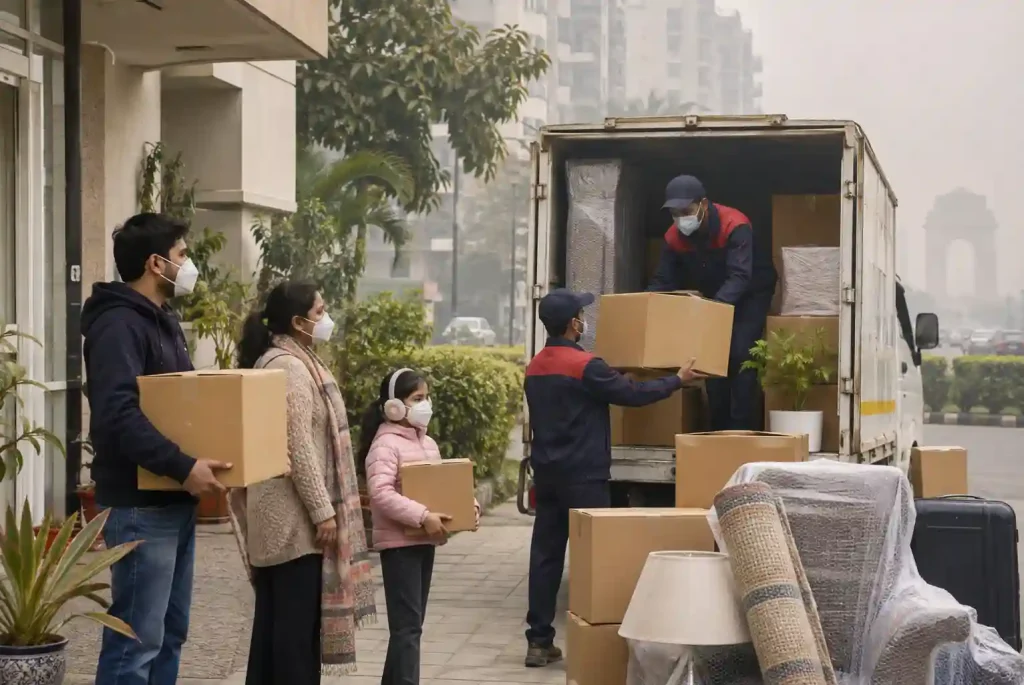
Moving to Delhi, Gurugram, Noida, Ghaziabad or Faridabad can become more difficult when air pollution rises. A moving truck that you booked in advance may not be allowed to enter Delhi on your moving day. This can lead to delays, extra costs and last-minute changes.
The Delhi-NCR GRAP restrictions 2026 affect certain vehicles and activities that cause air pollution. However, they do not automatically stop every household move. As of 25 November 2026, GRAP Stage II remains active, following the withdrawal of Stage III on 17 November.
Whether you are moving to Delhi from another state or shifting within NCR, this guide explains the rules, truck requirements, documents and practical steps to help you plan your move.
What Are the Delhi-NCR GRAP Restrictions 2026?
GRAP (Graded Response Action Plan) is a government plan to control air pollution in the National Capital Region. The Commission for Air Quality Management (CAQM) decides when to apply its stages. The revised GRAP schedule dated 29 September 2026 sets out the following four levels of the Air Quality Index (AQI):
- Stage I (Poor): AQI 201 to 300.
- Stage II (Very Poor): AQI 301 to 400.
- Stage III (Severe): AQI 401 to 450.
- Stage IV (Severe+): AQI above 450.
AQI tells you how polluted the air is. CAQM can also introduce a stage in advance based on pollution forecasts. Lower-stage rules continue when a higher stage starts.
How GRAP Stages Affect Household Shifting
Stage I and Stage II: Most Moves Can Continue
Normal household shifting in Delhi NCR can generally continue during these stages if the vehicle follows all applicable rules. Authorities increase pollution checks and take action against vehicles that release visible smoke. Trucks passing through Delhi without a delivery there may be diverted.
Stage III: Stricter Vehicle and Construction Rules
Vehicle Entry and Emission Rules
GRAP Stage III vehicle restrictions affect BS-III petrol and BS-IV or older diesel four-wheelers in Delhi, Gurugram, Faridabad, Sonipat, Ghaziabad and Gautam Buddha Nagar. Specific restrictions also apply to older diesel goods vehicles, depending on their size and registration.
Construction and Renovation Restrictions
Stage III stops many dusty construction and demolition activities across NCR. Packing boxes and moving furniture are not the same as demolition. However, wall breaking, tile cutting and similar dusty renovation work may be banned.
Stage IV: Heavy Truck Restrictions
Under GRAP Stage IV truck restrictions, heavy goods vehicles face stricter entry rules in Delhi. The 2026 schedule permits qualifying BS-VI diesel, CNG, LNG and electric trucks under this restriction. Delhi-registered BS-IV and older diesel heavy goods vehicles also face limits on running within Delhi.
Other traffic, permit and local entry rules still apply, even if a truck meets the emission standard.
Delhi Truck Entry Restrictions From November 2026
There is an important difference between GRAP stages and the separate standing rules for trucks entering Delhi.
Under the amendment to CAQM Direction No. 88, the temporary entry allowance for BS-IV commercial goods vehicles ended on 31 October 2026. From 1 November, commercial goods vehicles registered outside Delhi generally need to meet BS-VI standards or run on CNG, LNG or electricity to enter Delhi.
Delhi-registered goods vehicles are excluded from this particular standing entry ban, but other restrictions may apply. Household goods do not have an automatic exemption just because a family needs to move.
Example: Moving From Gurugram to Delhi
Suppose you book a Haryana-registered BS-IV diesel truck to move furniture into South Delhi. Even during Stage II, the standing entry rule can prevent that truck from entering the capital.
Ask for a qualifying vehicle instead. If you are still deciding where to settle, our Delhi vs Gurgaon living guide can help you compare both cities.
How to Plan Your Move During GRAP Restrictions
Use this GRAP moving checklist before finalising your booking:
- Check the latest CAQM orders the evening before the move and again before the truck leaves.
- Ask your mover for the truck’s fuel type, registration state, vehicle category and Bharat Stage emission standard.
- Confirm that the vehicle can travel along your full route, including entry into Delhi.
- Book your society’s loading area and service lift in advance, especially when moving into a high-rise apartment in Delhi.
- Keep a backup date or replacement vehicle ready. Read our guide to handling moving day emergencies for more ways to manage unexpected delays.
Important Documents for Moving Trucks
Vehicle and Driver Documents
Ask your mover to check these documents before dispatch:
- Vehicle Registration Certificate (RC).
- Valid Pollution Under Control (PUC) certificate, where required.
- Vehicle insurance, commercial permit and fitness certificate, as applicable.
- Valid driving licence for the vehicle category.
Household Moving Documents
Keep your moving bill, booking confirmation, item list and address details with you. These help explain the trip but do not give the truck a legal exemption. Refer to the Delhi Transport Department for vehicle documentation information.
Moving Costs and Timelines During GRAP
There is no standard government GRAP surcharge for household moves. However, home shifting charges in Delhi NCR may change if you need a newer truck, extra trips, temporary storage or a different route.
Get a written quote showing packing, labour, transport, tolls, applicable taxes and extra services. For longer routes, our intercity and international moving cost guide explains how costs and timelines can differ.
Stay Safe on Moving Day
Limit heavy outdoor activity when pollution is high. Keep medicines and daily essentials with you. Children, older adults and people with breathing problems may need extra care. Our Delhi winter pollution survival guide offers more practical advice for new residents.
Why Professional Relocation Services Can Help
Experienced packers and movers in Delhi NCR can help plan your move around vehicle rules. They can pack fragile items, handle bulky furniture, load and unload goods safely, and arrange door-to-door transportation.
Depending on the service you choose, movers may also provide shipment tracking, help with transit insurance, prepare item lists and arrange storage if delivery is delayed. Ask about these services before booking.
You can explore professional relocation support in Delhi to plan your packing and transportation needs. Remember that hiring a mover does not exempt any truck from government restrictions.
Frequently Asked Questions
1. Are Delhi-NCR GRAP restrictions 2026 active right now?
As of 25 November 2026, Delhi-NCR GRAP restrictions 2026 are at Stage II. Stage III was withdrawn on 17 November, but Stage I and Stage II measures remain in force. Check the latest CAQM order before your move because the active stage can change with air quality and forecasts.
2. Can packers and movers operate during GRAP Stage II?
Yes. Normal packing, loading, transportation and unloading can generally continue during Stage II. However, the moving truck must follow all applicable Delhi truck entry rules, pollution checks and local traffic restrictions. Ask your mover to confirm the vehicle’s eligibility before it arrives at your home.
3. Can a BS-IV moving truck enter Delhi in November 2026?
A BS-IV commercial goods vehicle registered outside Delhi generally cannot enter under the standing rule after 31 October 2026. A qualifying BS-VI moving truck, CNG, LNG or electric vehicle is a better choice. Delhi-registered vehicles are treated differently under that standing rule, although GRAP may add restrictions.
4. Are household goods considered essential goods under GRAP?
Do not assume that beds, clothes or kitchen items receive an exemption. The current rules do not provide a special exemption for normal household moves. The temporary allowance for older goods vehicles under Direction No. 88 also ended for essential commodities and services. Always confirm vehicle eligibility.
5. Does GRAP Stage III stop all household relocation?
No. GRAP Stage III restricts certain vehicles and many dust-producing construction activities. It does not automatically ban all household moves. You can normally pack and carry your belongings if the transport vehicle is legally allowed to operate. Avoid banned renovation work during the move.
6. Should I postpone my move during GRAP Stage IV?
Not always. First check whether a compliant moving vehicle can complete your route. If you cannot arrange one, rescheduling may prevent extra costs and delays. Consider moving on a day with better air quality if anyone in your family is especially sensitive to air pollution.
Conclusion
The Delhi-NCR GRAP restrictions 2026 do not mean that every move must stop. The key is to choose a legally permitted truck, check the current GRAP stage and keep the right documents ready.
Confirm the rules before dispatch, get a clear moving quote and prepare a backup plan. These simple steps can help you avoid unnecessary delays and make your relocation to Delhi NCR more organised.