
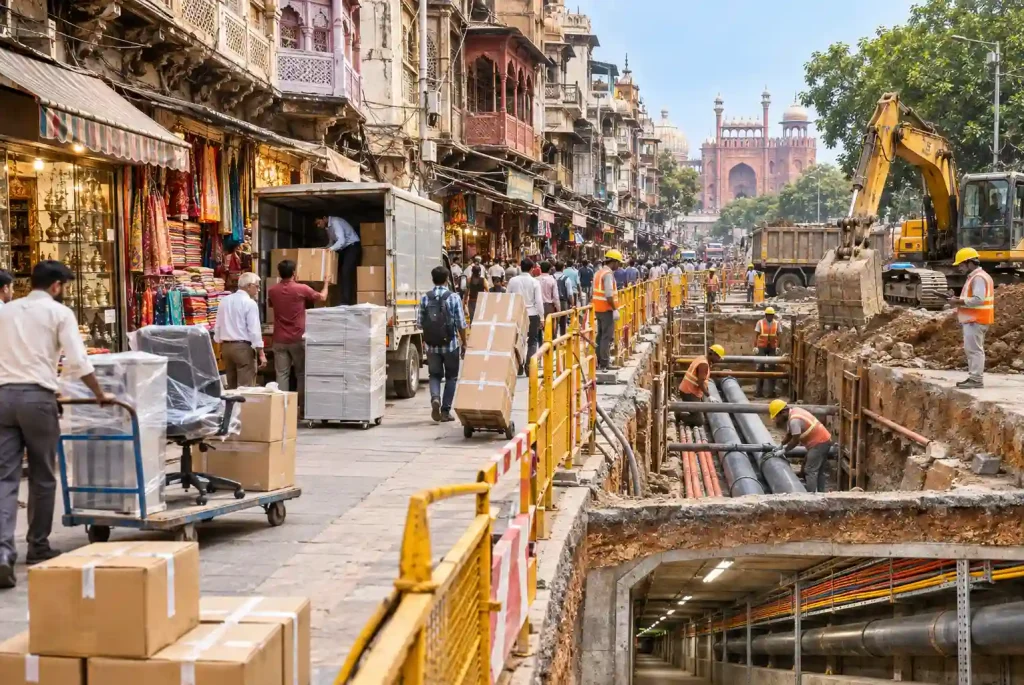
Running a business in Chandni Chowk means dealing with busy streets, narrow lanes and daily stock deliveries. Now, a new plan to move overhead wires underground has raised questions for shopkeepers. Will trucks face more restrictions? Will shops need to move? How can traders protect their stock during road work?
The Chandni Chowk underground makeover aims to improve local utilities and reduce the clutter of hanging wires. However, the work may temporarily affect access to some shops and markets. As of 25 November 2026, the proposed shared utility system is under technical review.
This guide explains the project, its possible impact on Chandni Chowk businesses, and how traders can plan deliveries, manage stock and prepare for commercial relocation without making rushed decisions.
What Is the Chandni Chowk Underground Makeover?
The project aims to shift overhead electricity cables underground. It also proposes shared channels for essential services. These channels are called multi-utility ducts. They can hold cables or pipes for services such as electricity, internet, water and gas, depending on the final design.
This is different from the earlier Chandni Chowk street redevelopment, which focused on making the main market road more suitable for people walking.
Which roads are part of the pilot project?
The BSES Yamuna Power Limited tender identifies two initial road sections:
- Esplanade Road: around 310 metres.
- More Sarai Road: around 560 metres.
The wider electrical project announced in February 2026 covers around 52.5 km of overhead lines, with an estimated cost of about ₹160 crore.
Current project status and timeline
The original schedule faced delays because surveys found more existing cables and utilities than expected. According to a 25 November 2026 report in Hindustan Times, a technical committee reviewed the proposed system on 20 November. A final construction schedule for every affected lane is not confirmed. Traders should check local notices before changing their plans.
How the Makeover May Affect Businesses in Old Delhi
Goods delivery and vehicle access
Goods transportation in Chandni Chowk already requires careful planning. According to Delhi Traffic Police, motor vehicle restrictions apply from 9 AM to 9 PM on the main road between Red Fort and Fatehpuri Mosque, with specified exceptions and rules for connecting roads.
The usual night access window is 9 PM to 9 AM on restricted stretches. However, temporary road closures and other vehicle rules may still apply. Check the latest official notice and plan around Delhi traffic conditions before sending a vehicle.
Stock handling and shop access
Road digging and safety barriers may make loading more difficult. Traders may need extra labour or hand trolleys to carry goods from a permitted unloading point to their shop.
For example, a textile wholesaler could split a large delivery into smaller loads. Shops in Old Delhi’s traditional markets can also keep fragile or valuable stock away from dusty work areas.
Will businesses need to relocate?
There is no general relocation order identified for this project. Many traders may continue working from their existing shops. A temporary stock move or warehouse relocation may help if access becomes difficult, but the decision should depend on actual conditions.
Businesses considering a permanent move can also explore business locations in Delhi NCR before choosing a new area.
How to Plan Commercial Relocation in Chandni Chowk
Step-by-step business moving checklist
- Check construction notices, vehicle access and market association updates.
- Visit the new shop or warehouse. Measure doors, stairs and loading areas.
- Make a stock list and take photos of valuable items.
- Choose a suitable vehicle and agree on the loading point.
- Move slow-selling stock first and essential goods last.
- Inform suppliers, staff and customers about any address changes.
Prepare a backup plan
Keep enough stock for normal sales during the move. Allow extra time for traffic and road changes. A guide to handling moving day emergencies can help you prepare for delays or unexpected problems.
Never load goods inside a closed work zone or block an emergency access route.
Documents, GST Rules and Commercial Moving Costs
Important documents for business shifting
Keep the following documents ready before moving stock:
- Stock inventory and relevant invoices or delivery challans.
- GST registration details and e-way bill, where required.
- Lease agreement or ownership proof for the new premises.
- Transport quotation, insurance papers and transporter details.
GST address change and e-way bill rules
If the main business address changes within Delhi, registered businesses generally need to apply for a GST registration amendment using Form GST REG-14. Under Rule 19, the application is generally due within 15 days of the change. Check the GST registration amendment advisory for current procedures.
An e-way bill for stock transfer is generally required for applicable goods worth more than ₹50,000, even when they are moved without a sale. Exceptions apply. Check the official e-way bill FAQs and speak to your tax adviser before dispatch.
How much does commercial relocation cost?
There is no fixed rate for commercial shifting in Old Delhi. Prices depend on stock volume, vehicle size, packing, stairs, labour, loading distance, storage and transit insurance.
Compare written quotes after a site visit. Ask whether GST and extra handling are included. If moving outside Delhi, read about intercity moving costs and timelines to understand the factors that can affect your budget.
Why Professional Relocation Services Can Help
Experienced movers can organise a commercial move around narrow lanes and limited vehicle access. Depending on the agreed service, they can assist with:
- Professional packing and labelling of fragile or bulky goods.
- Safe loading, transport and unloading of stock and equipment.
- Shipment tracking, temporary storage and insurance assistance.
- Inventory records, transport paperwork and door-to-door delivery where access permits.
Explore professional relocation support in Delhi to understand the available moving services. Confirm the scope of work, insurance exclusions and final unloading point before booking. Professional help can reduce stress, but no mover can guarantee unrestricted road access or a risk-free move.
Frequently Asked Questions
1. What is the Chandni Chowk underground makeover?
The Chandni Chowk underground makeover is a plan to shift overhead power cables underground and create shared channels for essential utilities. The first pilot covers sections of Esplanade Road and More Sarai Road. As of 25 November 2026, technical review is ongoing and the full work schedule is not confirmed.
2. Do shopkeepers need to move out of Chandni Chowk?
No general order requiring traders to leave their shops has been identified. Some businesses may choose temporary storage or shift part of their stock if local construction affects access. Check official notices and speak with your market association before making a decision about moving.
3. When can goods vehicles enter Chandni Chowk?
The main restricted road has a usual motor vehicle access window between 9 PM and 9 AM. Exceptions, temporary closures and separate goods vehicle restrictions may apply. Always check the latest Chandni Chowk traffic restrictions and confirm the permitted unloading point before booking transport.
4. Is an e-way bill needed when moving stock to another shop?
An e-way bill is generally needed when applicable goods worth more than ₹50,000 are moved, including movement without a sale. Some goods and movements are exempt, while others may need one even below this value. Confirm the rules with your tax adviser before moving business stock.
5. Can movers handle heavy equipment in narrow market lanes?
Yes, suitable commercial relocation services can arrange trained labour, protective packing and handling equipment for heavy goods. However, the mover must inspect the lane, stairs and shop entrance first. Ask how the team will carry items safely between the truck and your premises.
6. How can traders avoid losing sales during relocation?
Plan your business relocation in stages. Move extra stock first and keep popular products available until the final shift. Tell customers and suppliers about any changes early. Maintain a backup delivery plan and make sure your new shop is ready before closing the old one.
Conclusion
The Chandni Chowk underground makeover aims to improve essential services in Old Delhi. While it may bring temporary access problems, it does not mean every business needs to move. Traders should follow confirmed updates, protect stock, keep documents ready and plan deliveries carefully. If relocation becomes necessary, a phased move with suitable professional support can help reduce business disruption.